
Freagairt luath
A magic sponge should normally be used with water and light pressure. Wet the sponge, squeeze out excess water, and gently rub the stained area rather than scrubbing aggressively. Magic sponges made from melamine foam are generally suitable for durable surfaces such as ceramic tiles, sinks, ceramic sanitary ware, some stainless-steel areas, shoe soles, and certain painted walls. However, they should generally be avoided on glossy paint, automotive paint, leather, touchscreens, polished natural stone, and other delicate or easily scratched surfaces. When cleaning an unfamiliar surface, always test the sponge on a small hidden area first.
What Is a Magic Sponge?
A magic sponge, also commonly called a magic eraser sponge or melamine cleaning sponge, is made from open-cell foam melamine.
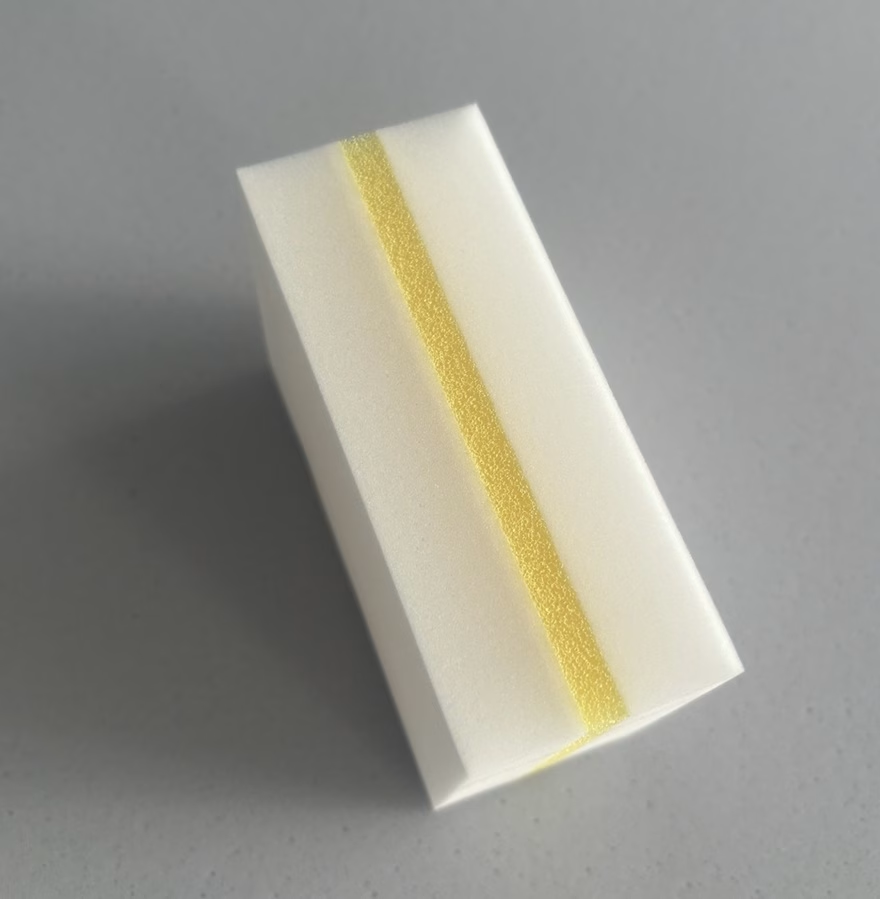
Unlike a conventional kitchen sponge that mainly absorbs water or carries detergent across a surface, melamine foam has a very fine three-dimensional porous structure.
When lightly rubbed against a surface, this structure provides a mild mechanical cleaning action that can help remove:
- Comharran sgrìobaidh
- Shoe marks
- Lorgan-meòir
- Crayon marks
- Fuigheall siabann
- Surface dirt
- Certain stubborn household stains
In many applications, only water is required.
However, the same micro-abrasive cleaning mechanism that makes a magic sponge effective also means it must be used carefully.
Bheir eòlas mar a chleachdas tu a spong draoidheachd gu sàbhailte is therefore just as important as knowing what it can clean.

How to Use a Magic Sponge Safely
Using a magic sponge correctly is simple, but a few small details can significantly reduce the risk of damaging the surface.
Step 1: Check the Surface First
Before cleaning, determine whether the surface is hard, durable, coated, polished, painted, or sensitive to abrasion.
If you are unsure, test the sponge on a small hidden section.
Tha seo gu sònraichte cudromach airson:
- Uachdaran peantaichte
- Meatailt còmhdaichte
- Uachdaran snasta
- Crìochnachaidhean sgeadachaidh
- Older furniture
- Unknown surface coatings
Step 2: Wet the Magic Sponge
Soak an spong melamine with clean water.
Water helps soften the foam and allows it to conform better to the surface.
Ceum 3: Brùth a-mach cus uisge
Gently squeeze the sponge until it remains damp but is no longer dripping.
Avoid twisting the sponge aggressively, as this can damage the internal foam structure.
Step 4: Use Light Pressure
Rub the stained area gently.
Start with minimal pressure and increase only if necessary.
A magic sponge does not normally need aggressive scrubbing.
Too much pressure can:
- Wear the sponge faster
- Increase foam breakage
- Remove surface coatings
- Reduce gloss
- Leave visible abrasion marks
For most stains, several gentle passes are better than one aggressive scrub.
Step 5: Wipe the Surface Clean
After cleaning, use a damp microfiber cloth or clean cloth to remove loosened residue.
If necessary, dry the surface afterward.
Which Surfaces Can You Clean with a Magic Sponge?
Spongan draoidheil work best on relatively hard and durable surfaces.
However, surface coatings vary significantly between manufacturers, so spot testing is still recommended.
- Leacan ceirmeach
Ceramic tiles are one of the most common applications for melamine cleaning sponges.
They can help remove:
- Salach
- Soap marks
- Shoe marks
- Lorgan-meòir
- Surface grime
Spongan draoidheil are especially useful around kitchens, bathrooms, and entrance areas.
For highly polished or specially coated tiles, test first.
- Ceramic Sinks and Sanitary Ware
Melamine foam can be useful for cleaning:
- Ceramic sinks
- Nigh miasan
- Toiletan
- Ceramic bathroom fixtures
It can help remove water marks, soap residue, and surface dirt without requiring large amounts of cleaning chemicals.
- Shoe Soles and Rubber Midsoles
One of the increasingly popular applications for magic sponges is sneaker and trainer cleaning.
They are particularly effective on:
- White rubber soles
- Meadhan-thalmhainn EVA
- Rubber toe areas
- Taobh-bhallachan
Lightly dampen the sponge and clean the dirty area using gentle strokes.
cudromach
Do not automatically use the sponge on the entire shoe.
Leather, coated leather, painted decorations, printed logos, suede, and delicate fabrics may react differently.
For sneaker cleaning, magic sponges are generally most suitable for rubber and durable synthetic sole areas.
- Small Marks on Painted Walls
Magic sponges are often used to remove:
- Lorgan-meòir
- Shoe scuffs
- Pencil marks
- Light crayon marks
- General wall dirt
However, painted walls require additional caution.
Flat or matte wall paint can sometimes be more sensitive than expected, while repeated rubbing may produce a visible shiny spot or remove some pigment.
Always test a hidden section first and use very light pressure.
- Stainless Steel — With Caution
A magic sponge can sometimes be used on local stains on stainless-steel surfaces.
Suitable examples may include certain:
- Sincichean cidsin
- Uidheam goireis
- Stainless-steel work surfaces
- Appliances without delicate decorative coatings
However, brushed, polished, coated, or mirror-finished stainless steel can be sensitive to abrasion.
If the stainless steel has a visible grain direction, clean gently along the grain rather than across it.
Always conduct a small-area test first.
Surfaces You Should Avoid Cleaning with a Magic Sponge
Because melamine foam works partly through mild physical abrasion, it should not be treated as suitable for every material.
Some surfaces may lose gloss, become scratched, or suffer permanent coating damage.
The following surfaces generally require particular caution or should be avoided.
- High-Gloss Painted Surfaces
Avoid using magic sponges aggressively on high-gloss paint.
The micro-abrasive action may gradually reduce the gloss or create a dull patch.
Am measg nan eisimpleirean tha:
- Glossy furniture
- Lacquered cabinets
- Piano finishes
- High-gloss decorative panels
- Coated household surfaces
For these applications, a soft microfiber cloth and a cleaner specifically designed for the coating are usually safer.
- Paint fèin-ghluasadach
A magic sponge should generally not be used on automotive exterior paint.
Modern vehicle surfaces often contain multiple layers, including:
- Base paint
- Còta soilleir
- Còmhdaichean dìon
- Wax or sealant
Melamine foam may dull or abrade these layers.
For car body cleaning, use dedicated automotive washing and detailing products instead.
- Leather
Avoid using magic sponges on leather unless the leather manufacturer specifically approves the method.
Leather may contain:
- Pigments
- Còmhdaichean dìon
- Oils
- Crìochnachaidhean uachdar
Abrasive cleaning can remove these layers and leave a permanently lighter or rougher area.
Tha seo a’ buntainn ri nithean leithid:
- Brògan leathair
- Sofathan leathair
- pocannan
- Automotive leather seats
- Goireasan leathair
- Touchscreens and Electronic Displays
Do not use a magic sponge on:
- Sgrionaichean fòn 'smart'
- Sgrionaichean tablet
- Laptop displays
- Pannalan smachd sgrion-suathaidh
- Television screens
- Camera displays
These surfaces may contain delicate anti-glare, oleophobic, or protective coatings that can be damaged by abrasion.
Use a suitable microfiber cloth and electronics-safe cleaning method instead.
- Clach Nàdarra
Avoid using magic sponges on delicate or polished natural stone unless specifically tested.
Am measg nan eisimpleirean tha:
- Marble
- Aol-aoil
- Travertine
- Polished granite
- Engineered stone with special coatings
Polished surfaces can lose gloss if subjected to repeated abrasive cleaning.
Natural stone may also have sealants that should not be damaged.
Use a stone-safe cleaning product recommended for the material.
- Easily Scratched or Delicate Surfaces
As a general rule, avoid using magic sponges on any surface where fine abrasion could create visible damage.
Dh’fhaodadh eisimpleirean a bhith ann:
- Acrylic
- Plexiglass
- Polished plastic
- Plastaig gleansach
- Còmhdaichean sgeadachaidh
- Còmhdaichean neo-mhaide
- Crìochnaidhean àrsaidh
- Soft metal surfaces
- High-gloss laminates
When in doubt, choose a less abrasive cleaning method.
Safe and Unsafe Surfaces at a Glance
| Surface | Moladh | Notaichean |
| Leac ceirmeach | San fharsaingeachd freagarrach | Test polished finishes |
| Ceramic sink | San fharsaingeachd freagarrach | Cleachd cuideam aotrom |
| Shoe rubber sole | San fharsaingeachd freagarrach | Avoid delicate shoe uppers |
| Painted wall | Cleachd le rabhadh | Test first, especially matte paint |
| Stàilinn nach meirg | Cleachd le rabhadh | Follow grain and test coating |
| Peant àrd-gloss | Seachain | May reduce gloss |
| Peant càraichean | Seachain | May affect clear coat |
| Leather | Seachain | Can remove finish or pigment |
| Touchscreen | Seachain | May damage surface coatings |
| Clach nàdarra | Mar as trice seachain | Can affect polish or sealer |
| Acraileach / Plexiglass | Seachain | Air a sgrìobadh gu furasta |
| Stuthan neo-bata | Seachain | May damage functional coating |
Why Can a Magic Sponge Damage Certain Surfaces?
The answer lies in the structure of melamine foam.
Under magnification, cured melamine foam contains an extremely fine interconnected network.
When rubbed against a surface, this structure creates a mild abrasive effect.
This helps explain why a magic sponge can remove marks that may be difficult to remove using a conventional soft sponge.
But cleaning performance always involves a balance between:
Cleaning force
agus
strì an uachdair
A durable ceramic tile may tolerate this contact very well.
A glossy coating, on the other hand, may show microscopic abrasion as visible dulling.
Air an adhbhar seo:
A stronger scrubbing action is not necessarily better cleaning.
Correct pressure and correct surface selection are essential.
Do You Need Cleaning Chemicals with a Magic Sponge?
In many everyday cleaning applications, water alone is sufficient.
That is one reason melamine foam cleaning products are popular for applications where users want to reduce unnecessary detergent consumption.
For heavier grease or specialized contamination, however, a compatible cleaning agent may still be required.
Before combining a magic sponge with chemical cleaners, check both:
- Whether the cleaner is compatible with the surface.
- Whether the cleaner is compatible with the sponge.
Do not assume that stronger chemicals automatically improve cleaning results.
Should You Wear Gloves When Using a Magic Sponge?
For normal household cleaning with water, many users handle melamine sponges directly.
However, gloves can still be useful when:
- Cleaning for long periods
- Working with detergents
- Cleaning greasy or contaminated areas
- You have sensitive skin
Avoid prolonged aggressive rubbing directly against the skin because a melamine sponge is designed to abrade surfaces rather than function as a personal-care sponge.
Can a Magic Sponge Be Used Dry?
For most cleaning applications, it is preferable to wet the sponge before use.
A damp sponge:
- Conforms better to the surface
- Produces smoother cleaning contact
- Can reduce unnecessary foam wear
- Makes it easier to remove loosened dirt
Dry cleaning may increase friction and foam wear.
Follow the instructions supplied with the individual product.
How to Make a Magic Sponge Last Longer
Melamine foam is a consumable cleaning material.
Some wear during cleaning is normal because the foam gradually erodes as it works against contaminated surfaces.
However, correct technique can improve durability.
To extend sponge life:
- Wet the sponge before use
- Do not twist it aggressively
- Cleachd cuideam aotrom
- Clean using several gentle passes
- Use only the area of the sponge needed
- Seachain oirean biorach
- Rinse away trapped dirt when necessary
For commercial cleaning products, sponge density, compression level, dimensions, and foam formulation can also influence cleaning feel and durability.
Standard vs. Compressed Melamine Foam
Not all magic sponges have exactly the same physical properties.
Melamine foam products can be designed with different:
- Ìrean dùmhlachd
- Co-mheasan teannachaidh
- Tiugh
- Cell structures
- Cumaidhean
- Laminated layers
Standard melamine foam is extremely lightweight and provides efficient cleaning action.
Compressed or higher-density melamine foam can offer a different hand feel and may provide improved durability for certain cleaning applications.
This makes product engineering especially important for applications such as:
- Sneaker cleaning
- Glanadh proifeasanta
- Glanadh taobh a-staigh chàraichean
- Household cleaning brands
- Private-label cleaning products
- Reusable cleaning pad systems
At SINOYQX, melamine foam can be processed into different dimensions, densities, compressed structures, and converted cleaning products according to the intended application.
Safety Checklist Before Using a Magic Sponge
Before cleaning an unfamiliar surface, follow these four rules:
- Dèan deuchainn an toiseach
Try the sponge on a hidden area.
- Tòisich gu socair
Use minimal pressure first.
- Thoir sùil air a’ Chrìochnachadh
Stop immediately if you notice:
- Call deàrrsadh
- Color transfer
- Sgrìobadh uachdar
- Toirt air falbh còmhdach
- Bidh inneach ag atharrachadh
- Follow the Surface Manufacturer’s Instructions
When the surface is expensive, delicate, coated, or professionally finished, the manufacturer’s cleaning recommendation should take priority.
Ceistean Bitheanta
Is a magic sponge safe for all surfaces?
Chan eil.
Magic sponges have a mild abrasive cleaning effect and are not suitable for every material.
They should generally be avoided on delicate, glossy, polished, coated, or easily scratched surfaces.
Always test an unfamiliar surface first.
Can you use a magic sponge on painted walls?
'S e, ach gu faiceallach.
Magic sponges can remove small marks from many painted walls, but excessive rubbing may affect the paint finish.
Matte and flat paints can be particularly sensitive.
Test on a hidden area before cleaning a visible section.
Can you use a magic sponge on stainless steel?
It may be suitable for some stainless-steel surfaces, but caution is required.
Brushed, polished, mirror-finished, or coated stainless steel may show abrasion.
Always test first and, where applicable, wipe along the grain.
Can a magic sponge clean shoes?
Yes, particularly the rubber soles and midsoles of sneakers and trainers.
Avoid automatically applying it to leather, suede, printed graphics, or delicate coated shoe materials.
Can I use a magic sponge on my car?
A magic sponge should generally not be used on automotive exterior paint because its abrasive action may affect the clear coat or gloss.
Use dedicated automotive cleaning products instead.
Can you use a magic sponge on glass?
It depends on the type of glass and any coatings applied to it.
Plain glass may tolerate gentle cleaning, but coated, tinted, treated, or specialty glass can be more sensitive.
Test first and follow the glass manufacturer’s recommendations.
Can you use a magic sponge on marble?
It is generally better to avoid using a magic sponge on polished marble.
Melamine foam may affect the polished finish or stone sealer.
Use a cleaner specifically designed for natural stone.
Do magic sponges contain cleaning chemicals?
The cleaning action of standard melamine foam primarily comes from its fine porous structure rather than from detergent contained inside the foam.
However, finished retail products can differ, and some may include additional ingredients.
Always check the individual product information.
Why does a magic sponge get smaller when I use it?
Tha seo àbhaisteach.
Melamine foam gradually wears away as its fine structure mechanically removes contamination from a surface.
The rate of wear depends on factors such as:
- Garbh uachdar
- Brùthadh gnìomhaichte
- Stain type
- Dùmhlachd foam
- Sponge thickness
- Cleaning technique
Choosing the Right Melamine Foam for Cleaning Products
For cleaning brands and OEM manufacturers, there is no single magic sponge specification that is ideal for every application.
A household wall-cleaning sponge may need different physical characteristics from a sneaker cleaning sponge or commercial cleaning pad.
Am measg nam prìomh nithean airson measadh tha:
- Dùmhlachd foam
- Co-mheas teannachaidh
- Seasmhachd fliuch
- Coileanadh glanaidh
- Sponge thickness
- Tomhasan gearraidh
- Lamination uachdar
- Cruth pacaidh
- Intended cleaning surface
SINOYQX provides melamine foam materials and customized sponge solutions for different cleaning applications.
Available processing options can include:
- Foam melamine àbhaisteach
- Foam melamine teannaichte
- Dùmhlachd gnàthaichte
- Custom tiugh
- Gearradh gnàthaichte
- Cumaidhean sònraichte
- Laminated cleaning sponges
- Private-label/OEM products
- Pacadh reic gnàthaichte
Final Thoughts
ionnsachadh how to use a magic sponge safely comes down to understanding one important principle:
Use the right cleaning material on the right surface with the right amount of pressure.
Magic sponges can be highly effective on durable surfaces such as ceramic tiles, sinks, shoe soles, and certain household surfaces.
However, because melamine foam provides mild mechanical abrasion, it should be avoided or carefully tested on glossy paint, leather, automotive paint, touchscreens, polished natural stone, and other delicate finishes.
Nuair a tha teagamh ann:
Test a hidden area first, use water, start with light pressure, and stop if the surface appearance changes.
Mu SINOYQX
SINOYQX is a manufacturer and supplier of melamine foam materials and converted melamine foam products for cleaning, acoustic, thermal insulation, filtration, and other industrial applications.
For cleaning-product manufacturers and private-label brands, SINOYQX supports customized melamine sponge development including different densities, compression levels, dimensions, shapes, laminations, and packaging formats.
Am measg nan tagraidhean tha:
Magic cleaning sponges, sneaker cleaning sponges, household cleaning pads, professional cleaning products, customized melamine foam products, and OEM/private-label cleaning solutions.